

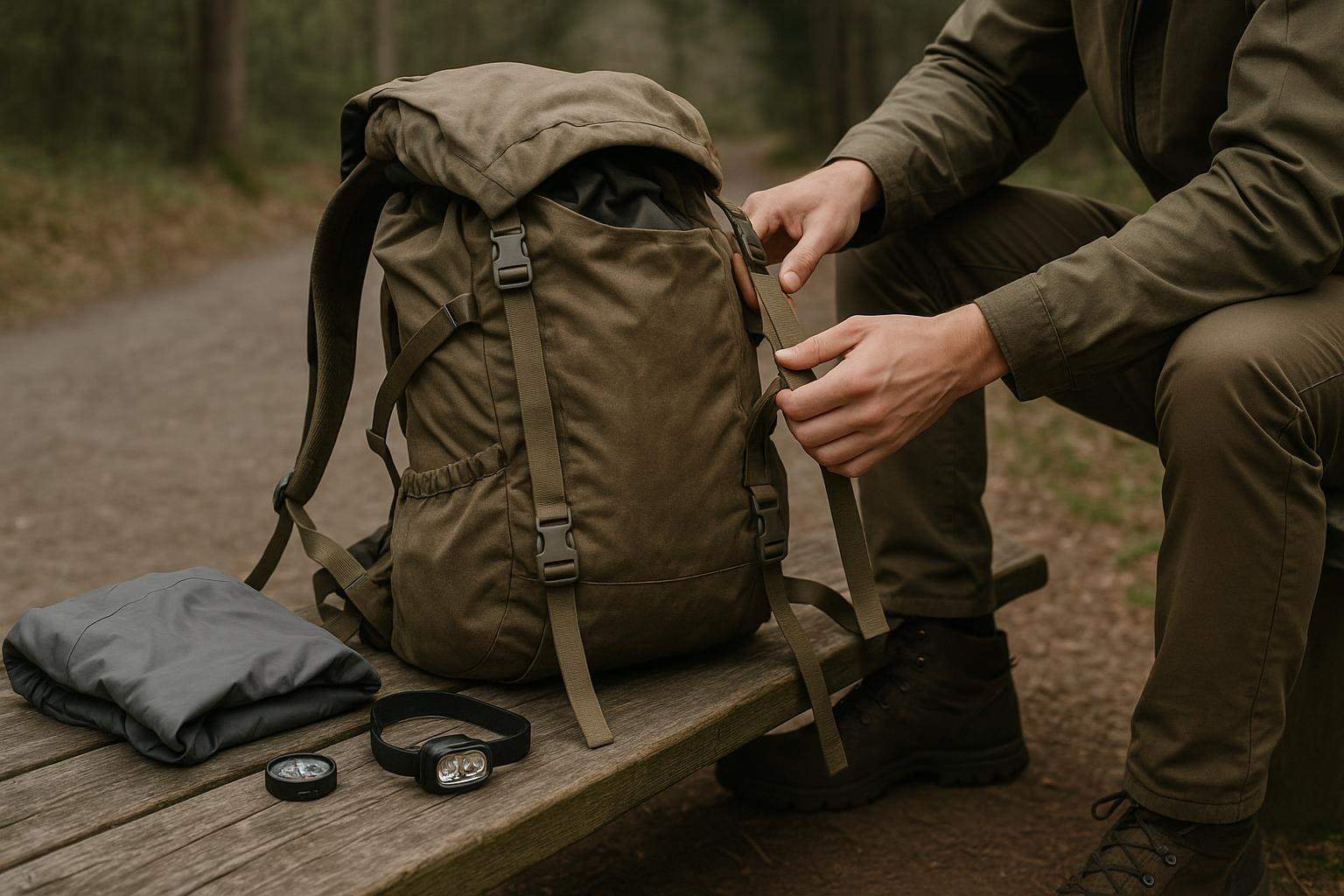
A day hike can go wrong before the trailhead if its kit was chosen by appearance rather than need. A heavy pack, untested rain layer or nearly dead headlamp creates problems that enthusiasm cannot fix. Good planning means identifying the trip's demands, choosing equipment that answers them and accepting sensible trade-offs instead of carrying every possible solution. The same approach works for camping equipment, workwear and military surplus gear: start with the conditions and the job, then buy, pack and maintain accordingly.
Start with the trip, not the gear category
Write down the outing's length, expected weather, terrain, access to shelter, water availability and whether you will carry everything yourself. A short walk from a vehicle allows different choices from a remote overnight trip, even if both are described as camping.
Then identify the most uncomfortable or risky failure you could reasonably face. Wet feet, a dead phone, poor visibility, inadequate insulation and an overloaded pack each point to a different solution. Extra socks may matter more than a larger knife; a dry bag may be more useful than another pocket organizer.
This is the first filter for outdoor essentials: if an item does not address a specific condition, support a necessary task or protect vulnerable equipment, question its place in the load.
Separate essentials from useful extras
An essential keeps you safe, mobile, hydrated, warm, visible or able to communicate. A useful extra improves comfort or convenience but is not vital to the plan. The distinction changes with the trip: a chair may be unnecessary on a short walk and reasonable at an established campsite.
Make a three-column list: required, helpful and optional. Required items might include suitable clothing layers, water, food, navigation aids, lighting, basic first aid and weather protection. The route and conditions determine the exact contents, so no generic list replaces judgment.
Check for overlap. Two compact tools that perform the same job may add weight without adding resilience. Conversely, a single point of failure deserves attention. If one strap, battery or container supports a critical task, consider whether a practical backup is warranted.
Choose equipment by failure points
Gear selection becomes clearer when you ask how an item might fail. A pack may be uncomfortable because its shape does not suit the load, its straps slip or it encourages overpacking. A jacket may disappoint because it breathes poorly during exertion, lacks room for layers or wets out during extended exposure.
Examine construction where stress is concentrated: stitching, buckles, zippers, handles, closures and attachment points. Smooth operation matters more than a long feature list. Try pockets with the gloves you expect to wear, and adjust straps while wearing the planned layers. If a component feels awkward at home, it will not become easier to use outside.
Tactical gear can help when its organization and durability match the task, but rugged appearance is not a performance guarantee. Extra webbing, rigid panels and numerous compartments may add bulk. Choose them when they improve access or protect contents, not merely because they suggest toughness.
Use surplus intelligently
Military surplus gear often offers practical materials, repairable construction and straightforward design, but quality and condition can vary. Items may have been stored for long periods, altered by previous owners or produced for conditions unlike yours.
Inspect fabric for brittle areas, mildew odor, fading, delamination and weak seams. Test buckles, snaps and drawcords repeatedly. On packs and load-bearing accessories, examine where straps meet the body. A small defect in a noncritical pouch may be acceptable; the same defect in a shoulder strap is a reason to pass.
Sizing requires particular care. Surplus labels may follow a specific sizing system or garment configuration, so compare actual measurements when available. Leave room for planned layers, but do not compensate for an unsuitable cut by tightening every adjustment. If the item cannot sit securely without restricting movement, it is not a bargain for that use.
Test the system before departure
A kit is more than its individual products. Pack it as you expect to carry it, wear clothing in the same order and practise retrieving items you may need quickly. Walk indoors or on familiar ground, noting pressure points, swinging tools, noisy closures and anything that catches on nearby objects.
Test water containers for leaks and confirm that batteries are fresh or charged. Make sure rain protection covers both you and the contents that must stay dry. Open food packaging and medical supplies before the trip so you know how they work with cold hands or limited light.
For camping equipment, assemble shelters and cooking systems before relying on them away from home. Read manufacturer instructions for stoves, fuel and lighting products, and follow current safety guidance. Fire, fuel and electrical equipment require particular caution. Local restrictions and regulations can change, so check official guidance for the destination before departure.
Maintain, repair and revise the load
Equipment care starts when the trip ends. Empty every pocket, remove grit and let damp items dry fully before storage. Do not seal wet fabric in a container for convenience. Check metal hardware for corrosion, inspect elastic and cords, and clean footwear according to its material rather than applying one treatment to everything.
Keep a small repair set suited to the kit: thread or repair tape, spare cord, fasteners and the tool needed for a basic adjustment. Do not carry a large collection of fixes you have never practised. A repair helps only if you can identify the problem and apply the solution without causing further damage.
After each outing, remove anything unused unless it serves a clear backup purpose, then add what you genuinely needed. Outdoor kit planning is not a one-time shopping decision. It is a repeatable process of matching equipment to conditions, testing the arrangement and learning where simplicity serves you better than more gear.